Sub-Total: $0.00
Our Vision
CTI has helped individuals and families in our community get the resources that they need to thrive. From helping clients find emergency assistance to advocacy and support during legal proceedings, we are proud of the impact we have made. But there is still much work to be done, and we are committed to continuing our efforts to overcome the barriers that prevent fair and equitable employment and housing.
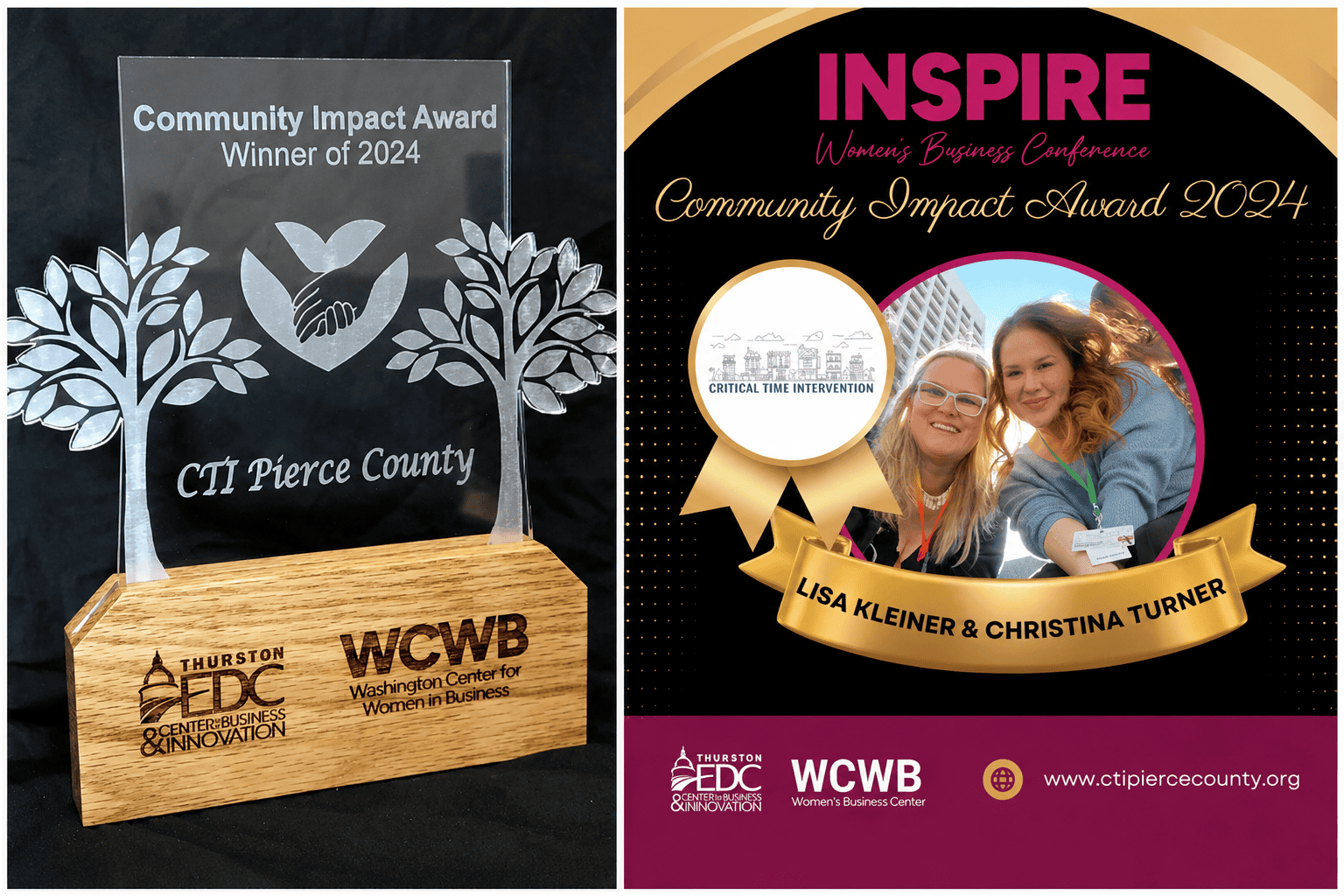
We believe in creating lasting change through compassion and dedicated service. In May 2024, CTI was awarded the Community Impact Award from the Washington Center for Women in Business. It was such an honor to accept this award from our community. We are passionate and determined to continue to spread advocacy and support across Tacoma and Pierce County.
Our Mission
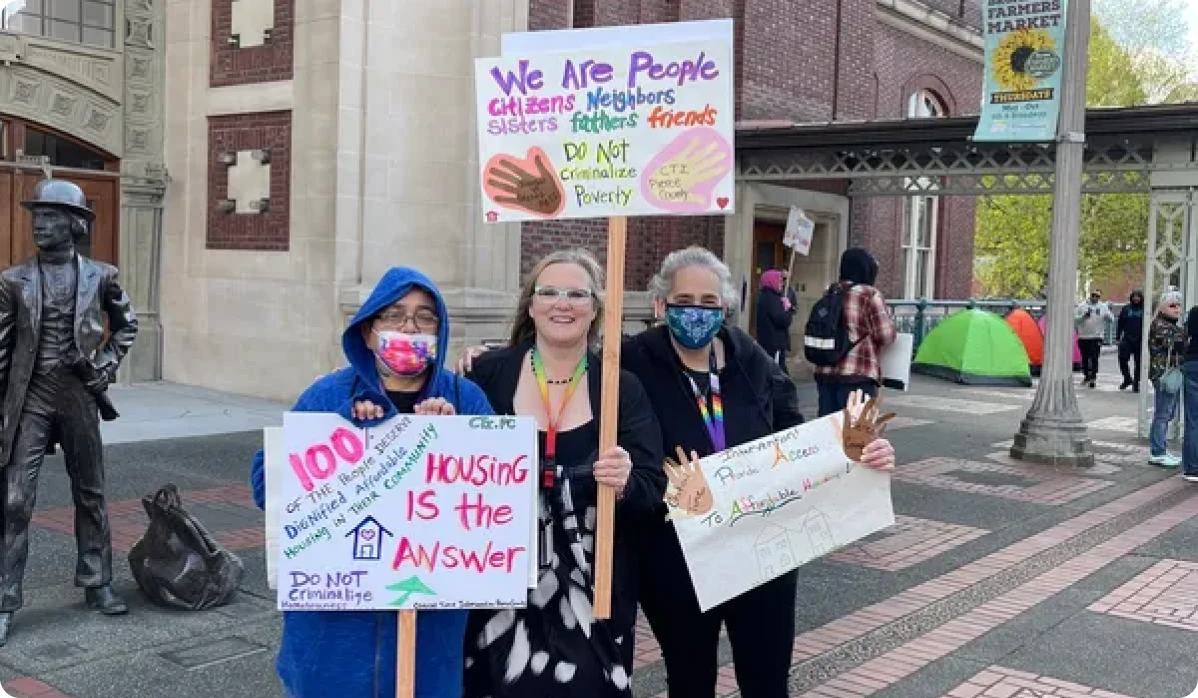
Our mission is to help the unhoused community overcome barriers to employment and housing. We are committed and determined to help others navigate the complex system. Together, we will make this happen because housing is a human right.
Our Values
Kindness, Compassion, Integrity, Diversity, Inclusion, Collaboration and Transparency.
Understanding the Purpose and Support
Critical Time Intervention (CTI) is a time-limited, evidence-based practice that supports society's most vulnerable individuals during periods of transition. It promotes community integration and continuity of care by helping people build lasting connections with community resources and support systems.
For Whom
CTI has been used with veterans, people with mental illness, individuals experiencing homelessness or incarceration, and many other groups across four continents.
How We Apply the CTI Model
We use the model to help individuals transition from homelessness into stable housing while also supporting their employment goals.
Eligibility Requirements
Funding for the program requires Medicaid enrollment. Clients must also meet the following eligibility criteria:
- Must be disabled.
- Must have experienced homelessness for 12 consecutive months, or have had three episodes of homelessness totaling 12 months within the past four years.
- Must complete a Coordinated Entry assessment.
Building Pathways to Stability
Our mission is to help the unhoused community overcome barriers to employment and housing. We are committed and determined to help others navigate the complex system. Together, we will make this happen because housing is a human right.

The Future We Are Working Toward
Our vision is a community where everyone has access to the resources and support they need to thrive. We work towards this goal every day by providing vital services and advocating for policies that promote equity and justice. Our community unites to solve the housing crisis and ensure that every human being has safe, affordable housing.
The Foundation of the CTI Model
The model is built around a structured, evidence-based approach that supports individuals during periods of transition.

Core Components of the Model

Addresses a period of transition
-
Time-limited
-
Phased approach
-
Focused
-
Decreasing intensity over time
-
Community-based
-
No early discharge
-
Small caseloads
-
Harm reduction approach
-
Weekly team supervision
-
Regular full caseload review

A Structured Path Through Every Phase
Pre-CTI
Develop a trusting relationship with the client and help to overcome barriers to housing and employment. Once a lease is signed, clients move into Phase 1.
Provide support and begin to connect clients to people and agencies that will assume the primary role of support.
- Make home visits.
- Engage in collaborative assessments.
- Meet with existing supports.
- Introduce the client to new supports.
- Give support and advice to clients and caregivers.
Monitor and strengthen the support network and the client's skills.
- Observe the operation of the support network.
- Mediate conflicts between clients and caregivers.
- Help modify the network as necessary.
- Encourage the client to take more responsibility.
Terminate services with a support network safely in place.
- Step back to ensure that supports can function independently.
- Develop and begin to set in motion a plan for long-term goals.
- Hold meetings with clients and supports to mark the final transfer of care.
- Meet with the client for the last time to review progress made.
Our Team
Every member has a unique story, perspective, and talent to share. We recognize the individuals whose creativity, passion, and contributions help strengthen our community. Through their work, ideas, and commitment, they continue to inspire meaningful connections and positive change.
Lisa Kleiner
Clinical Director and CTI Navigator
Jasmine Booth
Office Manager and CTI Navigator
Kalin Moreau
Team Lead, CTI Navigator and Social Media Director
Virgil Rousselle
CTI Navigator
Cherice Hall
Resource Navigation and Social Media Assistant
Lasting Change Within Our Community
We have helped individuals and families in our community get the resources that they need to thrive. From helping clients find emergency assistance to advocacy and support during legal proceedings, we are proud of the impact we have made.
Continuing the Work Ahead
But there is still much work to be done, and we are committed to continuing our efforts to overcome the barriers that prevent fair and equitable employment and housing. We believe in creating lasting change through compassion and dedicated service.
Projects We're Working on